
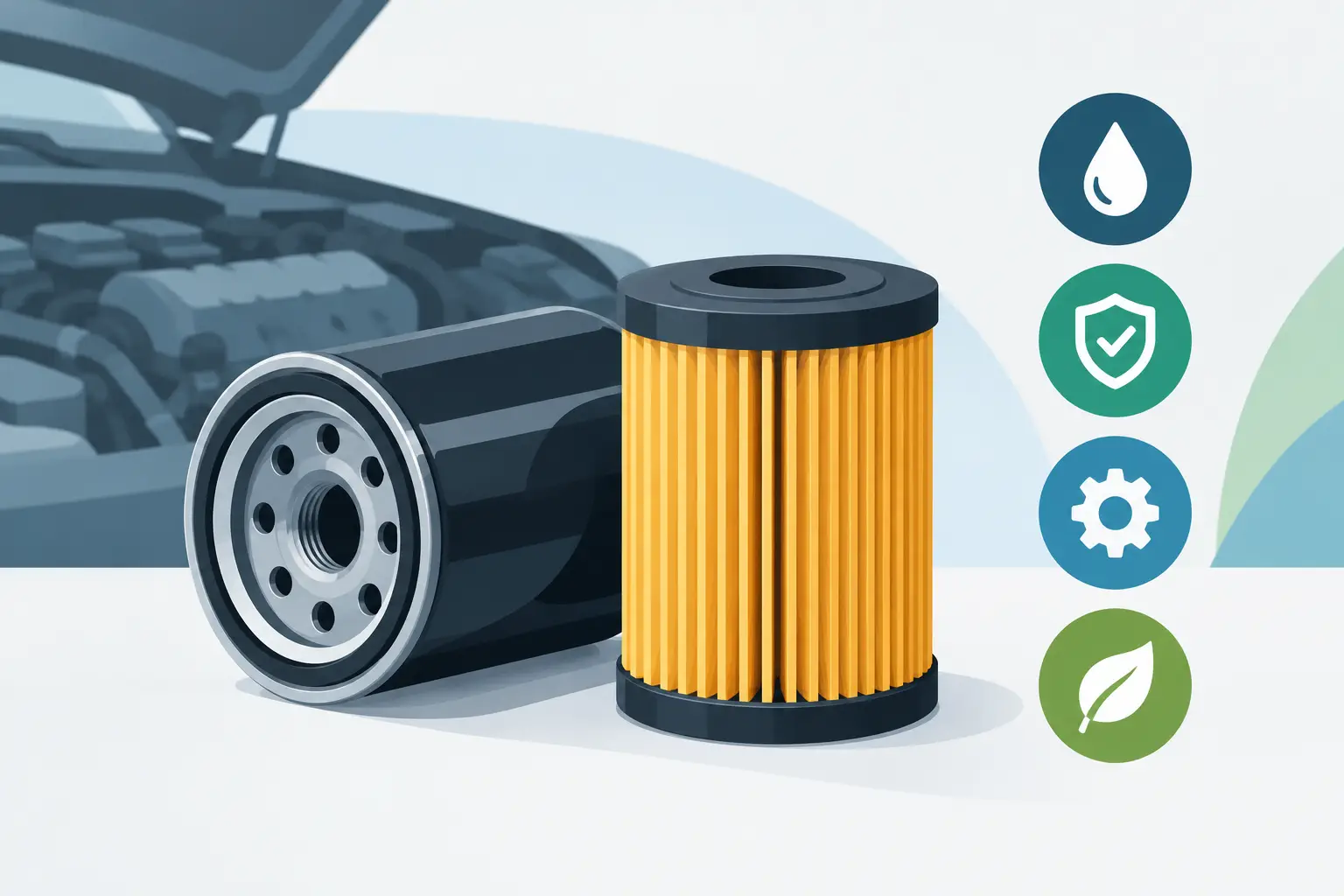
A synthetic oil filter is often treated as a required upgrade whenever an engine switches to synthetic motor oil. The reality is more useful: synthetic oil and filter construction are related, but they are not the same thing. Your engine needs a filter that fits correctly, flows properly, captures contaminants effectively, and remains dependable for the full service interval you plan to run.
For a daily driver in traffic, a turbocharged performance car, a hard-ridden motorcycle, or a fleet vehicle that cannot afford downtime, the right oil filter helps preserve oil quality where it matters most: inside the engine. Understanding the media, bypass valve, capacity, and fitment behind the label makes it much easier to choose with confidence.
What Is a Synthetic Oil Filter?
The term synthetic oil filter usually describes an oil filter made with synthetic or synthetic-blend filter media. Unlike traditional cellulose media, which is largely paper-based, synthetic fibers can be engineered for more consistent pore size, high contaminant capacity, and stable performance across demanding operating conditions.
That does not mean every synthetic-media filter is automatically the best choice for every vehicle. Filter performance depends on the entire design, not only the media. A well-built filter also needs durable end caps, reliable sealing, a correctly calibrated bypass valve, and an anti-drainback valve where the engine design requires one.
Synthetic motor oil is formulated to resist breakdown and maintain protection under heat and load. It can support longer drain intervals when the vehicle manufacturer approves them. If you are running those longer intervals, your oil filter must have enough contaminant-holding capacity to stay effective until the oil change. That is where a quality synthetic or synthetic-blend media filter can be a smart match.
Why Filter Media Makes a Difference
Engine oil does more than lubricate moving parts. It helps carry heat away from critical components and suspends dirt, combustion byproducts, metal particles, and other contaminants so they can be removed by the filter. If those particles continue circulating, they can contribute to wear in tight-clearance areas such as bearings, camshafts, and turbocharger components.
Filter media has to balance two competing jobs: capture contaminants and allow sufficient oil flow. A filter that is too restrictive may create excessive pressure drop, especially when oil is cold. A filter that flows freely but captures too little debris compromises engine protection. The best designs are engineered to manage both demands.
Synthetic fibers can offer advantages in this balance because they can be arranged more uniformly than conventional cellulose fibers. In practical terms, that may support efficient filtration, strong oil flow, and a higher capacity to hold contaminants before the filter becomes loaded. Results still vary by filter model, engine application, and operating conditions, so the construction and intended service interval matter more than a marketing term alone.
Synthetic Oil Filter Benefits for Longer Intervals
A synthetic oil filter is most relevant when your maintenance plan places greater demands on the filter. That can include manufacturer-approved extended oil-change intervals, high-mileage driving, frequent stop-and-go traffic, towing, track use, or operation in hot and humid conditions.
A higher-capacity media can hold more contamination over time. This is valuable because oil does not stay clean simply because it is synthetic. Even premium oil collects soot, dust, moisture, fuel dilution, and microscopic wear material as the engine operates. The filter remains a frontline component in managing that contamination.
Temperature stability can matter as well. Engines experience repeated heat cycles, and performance engines may see high oil temperatures under boost, load, or sustained high rpm. Quality filter materials and internal components should remain structurally sound throughout the recommended service period. A filter that deforms, leaks internally, or suffers a failed valve cannot provide the protection its label promises.
Still, longer intervals are not automatically the right choice. Short trips that do not fully warm the engine, severe traffic, dusty conditions, and aggressive use can all justify more frequent oil and filter changes. Follow your vehicle manufacturer’s maintenance guidance first, then consider how and where the vehicle is actually used.
The Parts Beyond the Filter Media
When comparing oil filters, look beyond the word “synthetic.” Several internal features influence how the filter performs in real service.
Bypass Valve
The bypass valve opens when oil is too thick during a cold start or when the media becomes heavily restricted. Its job is to prevent oil starvation by allowing oil to continue reaching the engine. This means bypassed oil may not be filtered at that moment, but maintaining oil flow is the priority.
The valve must open at the correct pressure for that engine’s lubrication system. A poorly matched filter may have a bypass setting that does not align with the manufacturer’s design. That is one reason correct application fitment is more important than choosing a filter solely by size or thread pattern.
Anti-Drainback Valve
Many spin-on oil filters are mounted in positions where oil can drain out after the engine is shut down. An anti-drainback valve helps keep oil inside the filter, reducing the time needed to build oil pressure after startup.
This feature is especially relevant for engines that sit overnight, vehicles used infrequently, and filters mounted sideways or upside down. Silicone anti-drainback valves are commonly favored for their durability across a broad temperature range, although the right design depends on the application.
Gasket, Canister, and Internal Support
The sealing gasket prevents external oil leaks, while the canister and internal center tube must withstand pressure, vibration, and normal service handling. These components are not glamorous, but they are essential. A high-efficiency media does little good if the filter has weak construction or does not seal correctly against the engine mounting surface.
Choosing the Right Filter for Your Vehicle
Start with the vehicle application, not the filter’s advertising language. Confirm the exact year, make, model, engine, and where relevant, trim or engine code. Cars, trucks, motorcycles, and powersports machines can have similar-looking filters with different bypass settings, seal dimensions, or overall lengths.
Next, match the filter to your oil-change approach. If you change oil at standard intervals and use your vehicle mainly for normal commuting, an OEM-specification quality filter may be entirely appropriate. If you use full synthetic oil for approved extended intervals or demand more from the vehicle, a synthetic-media or high-capacity filter may provide useful additional margin.
Performance use adds another layer. High rpm, elevated oil temperatures, forced induction, and sustained load place more demand on the lubrication system. In these cases, choose components engineered for the application and service them on a schedule that reflects how the vehicle is driven. More power is rewarding, but clean oil and dependable filtration are what help that power stay available over the long term.
For enthusiasts who already select K&N intake and filtration products, the same principle applies to oil filtration: use the correct part for the engine and prioritize proven construction over vague claims. Fitment is protection.
Common Misunderstandings About Synthetic Oil Filters
The first misconception is that synthetic oil requires a synthetic oil filter. It does not. A quality filter that meets the vehicle’s specifications can work with conventional, synthetic-blend, or full synthetic motor oil. The better question is whether the filter is designed for your interval, operating conditions, and engine.
The second is that a filter with finer filtration is always better. Extremely fine media may increase restriction if it is not engineered with enough surface area and flow capacity. A well-designed filter achieves effective particle capture without compromising the oil flow your engine needs.
The third is that a filter should always be left in service as long as the oil. In many cases, replacing both together is the sensible approach. If conditions are severe or the engine has known contamination concerns, changing the filter sooner may be wise. On the other hand, changing a high-quality filter far earlier than necessary adds cost and waste without a meaningful protection benefit.
Installation Habits That Protect Your Engine
Even the best filter cannot compensate for poor installation. Before fitting a new spin-on filter, make sure the old gasket has not remained stuck to the engine mounting surface. A doubled gasket can cause a serious leak almost immediately after startup.
Lightly lubricate the new gasket with clean engine oil, install the filter by hand, and tighten it according to the filter or vehicle manufacturer’s instructions. Over-tightening can damage the gasket or make the next service unnecessarily difficult. Under-tightening can allow a leak.
After filling the engine with the correct oil, start it and inspect the filter area for leaks. Shut the engine off, allow the oil to settle, then verify the oil level. This simple check is particularly worthwhile after any oil change on a performance vehicle, motorcycle, or equipment engine that works hard.
A synthetic oil filter is not a magic part, and it does not replace disciplined maintenance. It is a precisely engineered component that can complement synthetic oil, extended approved intervals, and demanding use when selected correctly. Choose by fitment, construction, and service conditions, then give your engine the clean, consistent oil supply it needs for every mile ahead.