
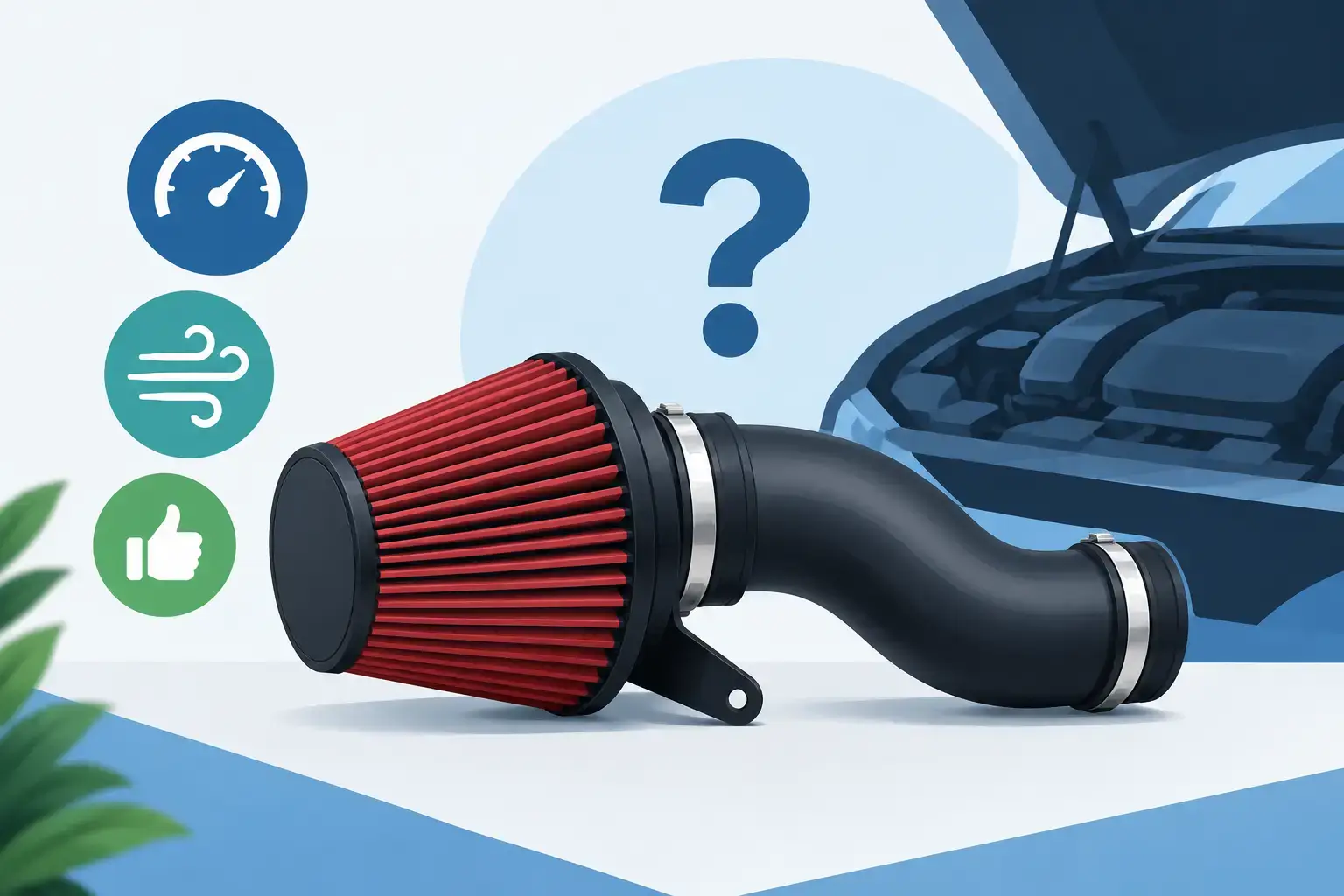
A restrictive factory airbox can make an otherwise responsive vehicle feel hesitant when you press the throttle. This high flow intake system review looks beyond the promise of louder induction sound and examines what a properly engineered intake can realistically deliver: improved airflow, dependable filtration, sharper response, and a reusable service path that suits long-term ownership.
For daily drivers, the right intake should improve the experience without creating new problems. For enthusiasts, it should support the engine’s airflow needs without compromising fitment, drivability, or protection. The difference comes down to design, vehicle application, and how well the system is installed and maintained.
What a High Flow Intake System Changes
An intake system manages the air entering your engine. The factory system is designed around several priorities, including packaging, noise control, production cost, and broad operating conditions. It may be highly effective for standard use, but it can also include narrow tubing, restrictive airbox passages, and filter media with limited airflow potential.
A high flow intake system replaces or revises key parts of that path. Depending on the application, this can include a larger conical air filter, a redesigned intake tube, heat shielding, mounting hardware, and provisions for factory sensors and breather connections. The objective is simple: give the engine a less restrictive path to draw the air it needs.
That does not mean every vehicle will gain the same result. Naturally aspirated engines, turbocharged engines, trucks under load, motorcycles, and powersports equipment all respond differently. An intake is most valuable when the original system is a meaningful restriction or when the vehicle already has other supporting upgrades.
High Flow Intake System Review: The Gains That Matter
The most noticeable improvement for many owners is throttle response. When airflow reaches the engine with less restriction, the vehicle can feel more eager as the throttle opens. On a manual-transmission car, this may make rev matching and acceleration feel cleaner. On an automatic daily driver, it may reduce the soft, delayed feeling that some factory intake systems create.
Horsepower and torque gains are possible, but they should be viewed realistically. Published gains vary by vehicle, engine speed, ambient temperature, and test method. A well-designed system can produce measurable improvements, particularly at higher RPM where the engine demands more air. On some vehicles, the gain may be modest but still worthwhile because it is paired with stronger intake sound and improved responsiveness.
Turbocharged engines can be especially satisfying with a high flow intake. The system may make turbo spool and bypass-valve sounds more audible while reducing restriction ahead of the compressor. Still, an intake is not a substitute for proper tuning, intercooling, exhaust work, or maintenance when those are needed. It is one part of an airflow package, not a miracle part.
Sound is also a real part of the ownership experience. An enclosed intake with a heat shield usually keeps the sound more controlled, while an open-filter design can produce a more aggressive induction note. Neither is automatically better. Commuters may prefer a quieter design that preserves factory-like refinement. Drivers who enjoy hearing the engine work may want the more pronounced intake sound of an open system.
Airflow Must Not Come at the Expense of Filtration
The best intake is not simply the one with the largest filter or loudest sound. It must protect the engine from damaging contaminants. Dust, fine debris, and road grime can accelerate wear when they pass through poor-quality filtration media.
Oiled cotton filter media is engineered to balance airflow with contaminant capture. The filter’s multiple cotton gauze layers and oil treatment help trap particles while allowing air to move efficiently through the media. Because the element is washable and reusable, owners can service it rather than repeatedly discard and replace a paper filter.
That value becomes more meaningful over years of driving, especially for vehicles used in dusty environments, heavy traffic, construction areas, rural roads, or off-road conditions. Reusability can reduce replacement-filter waste, but it only works when maintenance is done correctly. Over-oiling a filter can contaminate an airflow sensor, while running an under-oiled filter reduces its intended filtration performance. Use the correct cleaning and oiling procedure for the filter type.
Fitment Is More Important Than Universal Appeal
A vehicle-specific intake is generally the smarter choice for most owners. It is designed around the engine bay, factory sensor locations, hood clearance, mounting points, and expected airflow characteristics of a particular application. That translates into a cleaner installation and less guesswork.
Universal intake kits can be useful for custom builds, engine swaps, race vehicles, or equipment with limited aftermarket support. However, they demand more care. The wrong tube diameter, poorly placed sensor, loose coupler, or exposed filter can create check-engine lights, unstable idle, water exposure, or hot-air ingestion.
Before ordering, confirm the exact year, make, model, engine, trim, and any relevant drivetrain details. A mid-year production change, different engine code, or factory turbo configuration can affect compatibility. This is also the moment to consider local inspection rules, warranty considerations, and whether your vehicle uses an enclosed engine bay that benefits from a heat-shielded intake design.
Heat Management Separates Good Systems From Basic Kits
Cooler incoming air is denser, which can support combustion efficiency. That is why many intake systems use a heat shield, factory fresh-air ducting, or a sealed airbox section to isolate the filter from engine-bay heat.
But heat management deserves a practical perspective. At low speeds or in stop-and-go traffic, every engine bay absorbs heat. A heat shield cannot eliminate that entirely. Once the vehicle is moving and fresh air passes through the intake area, a properly designed system should recover quickly and deliver a more consistent air supply.
A shiny metal pipe alone is not proof of performance. Tube shape, internal surface quality, diameter transitions, filter placement, and sensor compatibility all matter. The goal is stable, efficient airflow, not just a larger-looking component under the hood.
Installation: Straightforward, but Do Not Rush It
Most direct-fit intake systems are suitable for capable DIY owners using basic hand tools. Set aside enough time to work carefully, especially if the vehicle has delicate clips, a mass airflow sensor, or tight engine-bay access. Read the instructions before removing the factory assembly, and keep factory parts organized in case you ever need to return the vehicle to stock.
During installation, inspect each coupler and clamp. Connections should be fully seated, correctly aligned, and tight without being overtightened. Confirm that wiring, vacuum lines, and breather hoses are routed without tension or rubbing. If the intake includes a heat shield, make sure it is secured and does not contact moving or hot components.
After installation, start the engine and listen for air leaks or irregular idle. A whistle, fluctuating idle, or check-engine light may point to an unsealed connection or sensor issue. Correct the cause rather than assuming the vehicle will adapt on its own.
Maintenance Is Part of the Performance Equation
A reusable intake filter is designed for long service life, not zero service. Inspection intervals depend on where and how the vehicle is used. A highway-driven passenger car may go a long time between cleanings, while a motorcycle, truck, ATV, or vehicle used on dusty roads may need more frequent attention.
Do not clean the filter simply because it looks slightly darker than new. Follow the manufacturer’s service guidance and assess the operating environment. When cleaning is due, use the approved cleaner, rinse gently from the clean side outward when instructed, allow the filter to dry completely, then apply the correct amount of filter oil evenly. Never use compressed air, harsh solvents, or excessive oil.
This is where a reputable, application-specific system earns its keep. K&N has built its high-flow filtration reputation over more than 50 years around washable, reusable oiled-cotton technology designed for both performance and protection.
Is a High Flow Intake Right for Your Vehicle?
A high flow intake system makes sense when you want a more responsive driving feel, a stronger induction note, reusable filtration, and a cleaner-looking engine bay. It is especially appealing for owners who plan to keep their vehicle and value serviceable parts over repeated disposable-filter purchases.
It may not be the first upgrade to choose if the vehicle has unresolved maintenance issues, a dirty throttle body, worn spark plugs, boost leaks, or neglected factory filters. Restore the engine to proper operating condition first. The intake will perform best when the rest of the vehicle is healthy.
Choose a system engineered for your exact application, install it with care, and service the filter correctly. Then each press of the throttle becomes a more direct reminder that better airflow is not just a specification on a box – it is something you can feel from the driver’s seat.