
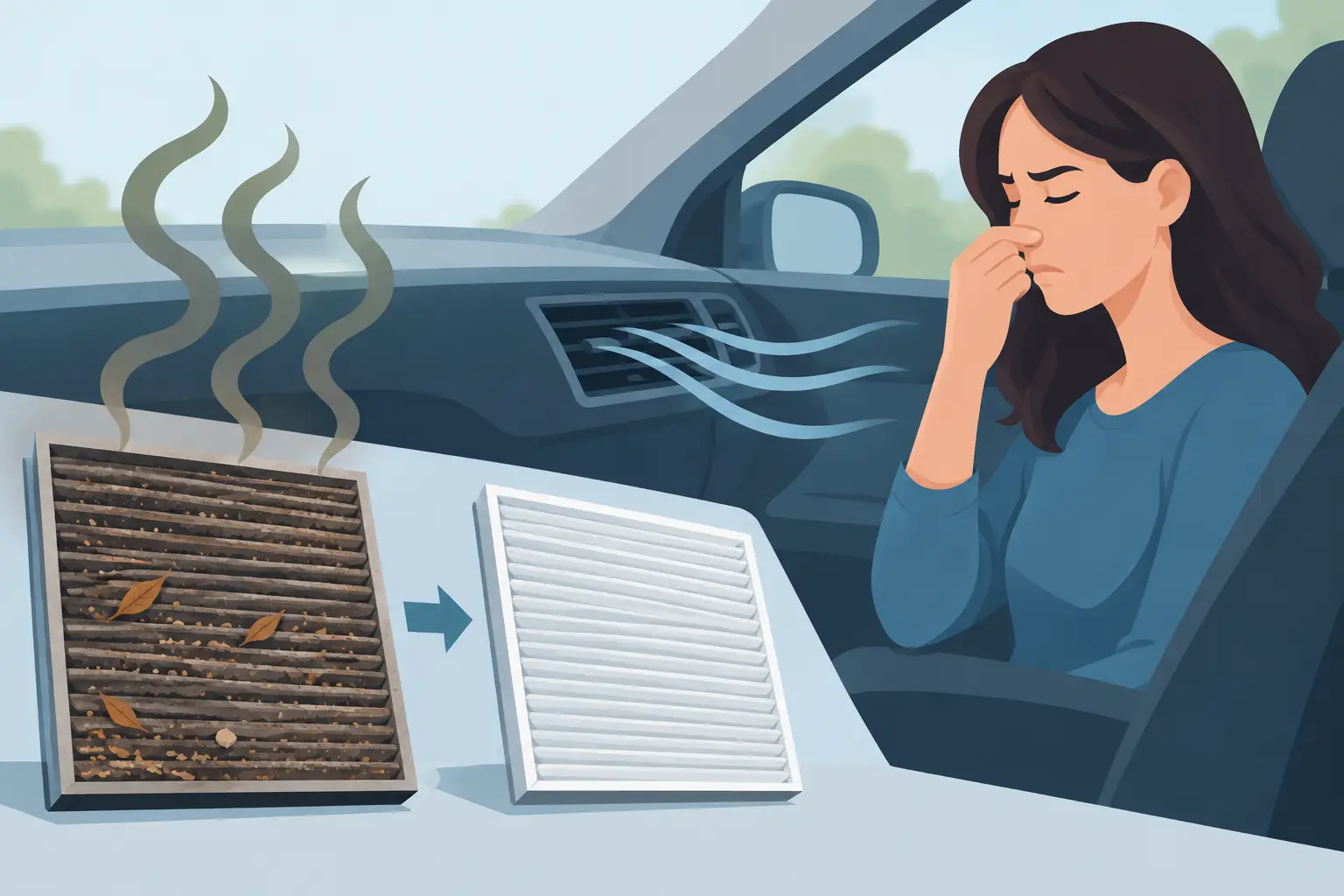
A cabin air filter smells bad for a reason: moisture, organic debris, and trapped road contaminants have turned part of your ventilation system into an odor source. Switching on the A/C should make the cabin more comfortable, not fill it with a musty, sour, or dirty-sock smell. The good news is that the filter is often part of the problem, but it is not always the whole problem.
For daily commuters, family vehicles, work trucks, and enthusiast builds alike, clean cabin air matters. It helps keep dust, pollen, soot, and debris out of the HVAC system while making every drive more pleasant. A bad smell is your cue to inspect the system before the odor becomes harder to remove.
Why Your Cabin Air Filter Smells Bad
The most common cause is moisture. Your air-conditioning system removes humidity from cabin air, and that condensation drains beneath the vehicle. After a drive, however, the evaporator core and nearby HVAC passages can remain damp. If the vehicle is parked for long periods in heat or humidity, mold and mildew can grow on damp surfaces and create the familiar musty smell when the blower starts.
A cabin filter can hold moisture too, especially when it is loaded with leaves, dust, pollen, and fine road grime. Once debris gets wet, it becomes a place where odor-causing microbes can develop. In areas with frequent rain, high humidity, construction dust, or heavy traffic, filters may become dirty faster than an owner expects.
The odor itself can offer a useful clue. A damp, earthy, or old-gym-sock smell usually points to moisture and microbial growth around the filter or evaporator. A dusty smell may mean the filter is clogged or incorrectly seated, allowing contaminants to bypass it. A sharp chemical odor could be exhaust fumes, coolant, fuel, cleaning chemicals, or an electrical issue. Those smells should not be dismissed as a routine filter problem.
The filter may be innocent
Replacing the cabin filter is smart maintenance, but a new filter will not cure an evaporator that is already contaminated. If the smell returns within days or weeks, the source is likely deeper in the HVAC housing. A blocked A/C condensate drain is another possibility. When water cannot drain correctly, it can collect in the system or soak nearby carpeting, making the cabin smell worse.
Rodents can also create a surprisingly strong odor. They may nest in the cowl intake, blower housing, or engine-bay area near the fresh-air intake. If you find shredded material, droppings, or a sudden foul smell, inspect carefully or have a workshop examine the system.
Check the Cabin Filter Before You Buy Parts
On many vehicles, the cabin filter sits behind the glove box, under the dashboard, or near the cowl below the windshield. Consult the owner’s manual or vehicle service information before removing panels. The job is usually straightforward, but plastic tabs and clips can break if forced.
Remove the filter and inspect both sides under good light. A filter packed with leaves, gray dust, dark soot, insect fragments, or damp material has reached the end of its useful service interval. Check whether it feels wet, smells strongly, or has visible discoloration. Also look at the airflow-direction arrow printed on its frame. An incorrectly installed filter can reduce airflow and leave gaps that let dirt move around the media.
Do not try to rescue a conventional disposable cabin filter by shaking it out, spraying it with perfume, or washing it. That may release trapped contaminants, damage the filter media, and leave the underlying odor untouched. Replace it with the correct part number and fitment for your vehicle.
A quality replacement cabin filter should fit securely and provide effective contaminant control without restricting the ventilation system unnecessarily. For drivers who want dependable filtration backed by an established performance heritage, K&N Singapore provides vehicle-specific filtration options through an authorized source. Always confirm application compatibility before ordering.
How to Remove the Smell From the HVAC System
Start by replacing a dirty or contaminated cabin filter. Then clean the source area rather than masking the smell with an air freshener. A fresh scent mixed with mildew is still mildew.
First, clear leaves and debris from the cowl area at the base of the windshield. These materials can block fresh-air inlets and hold water close to the HVAC intake. Make sure the vehicle’s drain channels are clear, but avoid pushing tools deep into unknown openings where you could damage components.
Next, run the A/C and confirm that condensate is dripping beneath the vehicle after several minutes. The exact location varies by model, but active A/C operation should normally produce water drainage. If there is no drainage, water appears inside the cabin, or the carpet is damp, have the condensate drain inspected. A blocked drain needs a proper repair, not a stronger fragrance.
For a mild recurring mildew odor, an HVAC evaporator cleaner designed specifically for automotive systems can help. Follow the product instructions exactly, including where to apply it and how long to ventilate the cabin. Some products are used through the intake area, while others are applied closer to the evaporator drain. Using the wrong chemical, oversaturating the system, or spraying household disinfectants into vents can damage interior surfaces or leave irritating fumes.
If the odor is severe, if you can see mold, or if it returns after cleaning and a filter replacement, book professional HVAC service. A technician can inspect the evaporator, blower motor, drain tube, seals, and air intake for contamination or water intrusion. This is especially worthwhile on vehicles with persistent fogging, weak airflow, or unexplained dampness inside the cabin.
Prevent a Bad-Smelling Cabin Filter From Returning
Your replacement interval depends on how and where you drive. A vehicle used mainly on clean highways may go longer than one driven daily through traffic, dusty worksites, unpaved roads, or wet tropical weather. Rather than relying only on mileage, inspect the cabin filter at each regular service and replace it when visibly loaded, wet, or odorous.
A few operating habits can reduce moisture buildup. In the last few minutes before parking, turn off the A/C compressor while leaving the blower running. This allows warmer moving air to dry some moisture from the evaporator surface. It will not fix a clogged drain or established mold, but it can make a difference for vehicles that repeatedly develop the dirty-sock smell.
Keep the cowl area clear of leaves, avoid parking for long periods beneath heavy shedding trees when possible, and address windshield or door-seal leaks promptly. If the vehicle has been flooded or has wet carpeting, treat that as a separate moisture issue. A cabin filter replacement alone cannot dry insulation beneath the carpet.
When a smell is a safety concern
Not every ventilation odor is harmless. Exhaust smell in the cabin may indicate a leak in the exhaust system or a problem with the fresh-air intake path. A sweet smell can indicate coolant. Burning plastic, hot wiring, or fuel odors require immediate attention. Turn off the HVAC system if necessary, ventilate the vehicle, and arrange an inspection. Do not continue driving simply because the odor seems to fade.
Choose Clean Air Over Cover-Up Scents
A bad cabin odor is usually maintenance talking. Inspect the filter, clear debris from the intake area, verify that A/C condensation can drain, and clean the evaporator system when needed. That approach protects more than cabin comfort – it supports airflow, helps the HVAC system work as intended, and makes every mile more enjoyable.
When you install the correct replacement filter and deal with the moisture source, the result should be simple: clean, neutral air when you turn the key, whether you are heading to work, loading up for a road trip, or taking the long route home.