
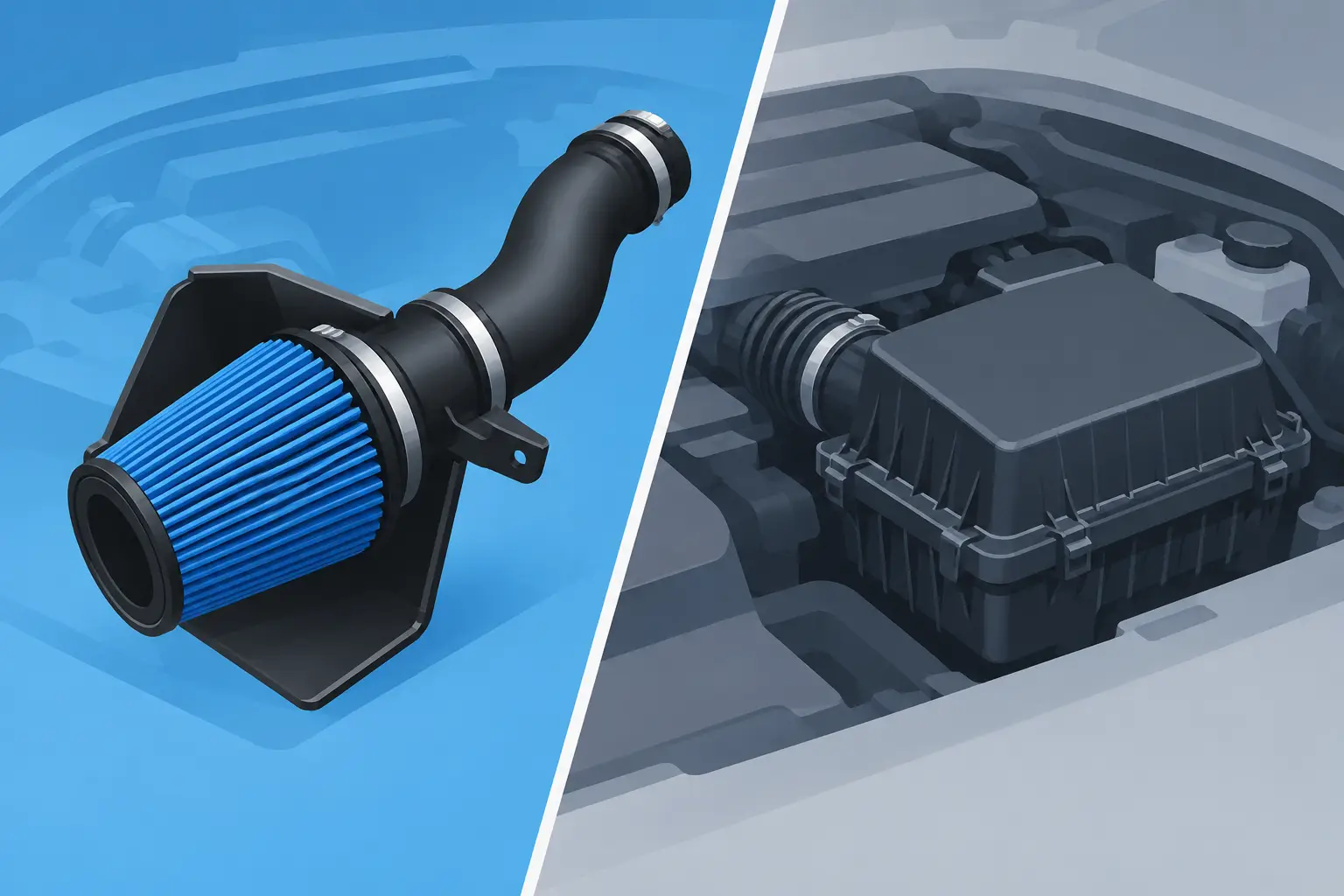
A factory airbox is not automatically a performance problem. It is designed around quiet operation, consistent filtration, packaging, water management, and the power level the manufacturer expects most owners to use. But for drivers who want sharper induction sound, less intake restriction, and a more engaging throttle response, the cold air intake vs stock airbox decision is a worthwhile one.
The right answer depends on your vehicle, how you drive it, and what you expect from an upgrade. A well-engineered intake can improve airflow and make an engine feel more responsive. A stock airbox can remain the smarter choice when maximum noise control, factory appearance, or demanding wet-weather use matters most. The key is to compare the complete system, not just the filter shape.
Cold Air Intake vs Stock Airbox: The Core Difference
A stock airbox is an enclosed plastic housing that holds a replaceable panel filter. It typically draws air through a snorkel or duct positioned away from the hottest areas of the engine bay. Automakers tune its internal volume, duct length, and resonators to control intake noise while delivering stable airflow in heat, rain, traffic, and long service intervals.
A cold air intake replaces some or all of that factory tract. Depending on the application, it may use a larger conical filter, smoother intake tube, heat shield, enclosed airbox, or a combination of these components. Its purpose is to reduce restrictions between the outside air source and the throttle body or turbo inlet while maintaining effective filtration.
The name can be misleading. Not every aftermarket intake places the filter far from engine-bay heat, and not every open-filter system consistently receives colder air than the factory setup. Intake design, sealing, duct routing, and the vehicle’s movement all determine the air temperature the engine actually sees.
Airflow and Power: Where an Intake Can Help
An engine is an air pump. If it can draw air through the intake path with less restriction, it may be able to make more power, particularly at higher engine speeds or under load. That is the basic case for a high-flow replacement filter or complete intake system.
The factory airbox is often sufficient for a completely stock daily driver. Modern manufacturers must meet durability, emissions, noise, and cost targets, however, so they may use narrow ducts, resonators, or dense disposable filter media that prioritize refinement over maximum flow. On naturally aspirated engines, the gains from an intake are commonly modest but noticeable in throttle feel and sound. Turbocharged engines can respond differently because reducing restriction ahead of the turbo may improve how efficiently the compressor draws air.
Do not judge results by a peak horsepower figure alone. A properly designed intake should support smooth, repeatable airflow across the rev range. The most satisfying upgrades often improve response when pulling away, overtaking, or accelerating out of a corner, even when the maximum dyno number is not dramatic.
A high-flow panel filter installed in the original airbox can be a practical middle ground. It retains factory ducting and water protection while replacing a restrictive disposable element with washable, reusable filter media. For many commuters and fleet vehicles, that is the most balanced first step.
Heat matters, especially at low speed
Cooler intake air is denser, which gives the engine more oxygen for combustion. That is why a sealed system that draws from a factory cold-air feed can be preferable to an exposed filter sitting beside a hot exhaust manifold.
At cruising speed, airflow through the engine bay can reduce the disadvantage of an open design. At idle, in slow traffic, or after a heat soak, underhood temperatures rise and an exposed filter can ingest warmer air. The engine management system can compensate, but the immediate performance feel may vary with conditions.
Look for an intake that uses a heat shield, a sealed enclosure, or a direct path to a cool external air source. A larger filter alone does not guarantee cooler, denser intake air.
Filtration and Engine Protection Come First
More airflow is only valuable when filtration remains dependable. Dust, fine grit, and other airborne contaminants can accelerate wear if they reach cylinders, turbocharger compressors, sensors, or oil. This matters in daily use, on construction-adjacent routes, during haze conditions, and for motorcycles, ATVs, and equipment operated in dusty environments.
The stock paper filter is effective, inexpensive upfront, and simple to replace. Its drawback is that it is disposable. Over the life of a vehicle, repeated replacements add cost and send more material to landfill.
A quality washable oiled-cotton filter is engineered to balance airflow with contaminant capture. The filter must be cleaned and re-oiled correctly at the recommended interval. Too little oil can compromise filtration performance, while excessive oil can create avoidable issues around sensitive airflow sensors. Follow the product instructions rather than guessing by appearance.
K&N’s High-Flow Air Filter platform is built around this ownership model: reusable oiled-cotton filtration that can provide long-term service when maintained correctly. For drivers who keep a vehicle for years, the ability to clean and reuse the filter can make a performance-oriented choice more economical and less wasteful.
Sound and Driving Character
This is where many owners feel the upgrade immediately. A stock airbox uses resonators and baffles to suppress intake sound. It keeps the cabin quiet, which suits relaxed commuting and long highway drives.
A cold air intake often makes the engine more audible under throttle. Naturally aspirated vehicles may develop a deeper induction growl. Turbocharged engines may reveal more spool, bypass-valve, or compressor sound. Motorcycles and powersports applications can feel even more direct because the rider is physically closer to the intake.
That sound is not proof of extra power, but it can make the vehicle feel more responsive and enjoyable. Be honest about your preference. If you want a quieter cabin or regularly carry passengers who value refinement, a reusable panel filter in the stock airbox may deliver better value than a louder open intake.
Installation, Fitment, and Electronics
The best intake is the one engineered for your exact year, make, model, engine, and market specification. Small differences in sensor placement, duct routing, battery location, and emissions equipment can make a universal solution a poor fit.
A vehicle-specific kit should position the filter securely, provide the required brackets and couplers, and accommodate mass airflow, intake air temperature, or breather connections where applicable. Poorly fitted intake pipes can leak unmetered air, rub against components, or loosen over time. Any of these problems can trigger warning lights or create inconsistent drivability.
Before fitting an intake, inspect the existing system. Cracked hoses, a damaged airbox lid, loose clamps, or an overdue filter replacement can reduce performance on their own. After installation, ensure every clamp is tight, every sensor connector is secure, and the filter has enough clearance from hot and moving components.
For vehicles still covered by warranty or subject to local emissions and inspection requirements, confirm the product is appropriate for your application. A good upgrade should not require you to accept avoidable compromises in legality, reliability, or serviceability.
Water Risk Is Real, but Context Matters
A common concern is hydrolock – severe engine damage caused when a running engine ingests enough water that the cylinders cannot compress it. This is not a routine risk from normal rain. The concern rises when an intake relocates the filter low in the bumper area and the vehicle is driven through deep standing water.
The stock airbox is usually mounted higher in the engine bay and often has drainage provisions. That gives it an advantage for owners who regularly encounter flooded roads, water crossings, or off-road conditions. A sealed aftermarket airbox that retains a high filter location can offer a more sensible compromise than a low-mounted cold-air design.
If your route includes frequent heavy rain and pooled water, prioritize filter placement and enclosure design over marketing language. Never drive through water that approaches the intake’s potential pickup point, regardless of which system you use.
Cost Over Time: Disposable Versus Reusable
The stock route has the lowest immediate cost: buy a paper filter, install it, and discard it at the next service interval. It is simple and predictable.
A reusable replacement filter costs more initially, while a complete intake costs more again because it includes tubing, mounting hardware, shields, and a larger filter assembly. The long-term value changes when the filter can be cleaned and reused instead of replaced repeatedly. For high-mileage drivers, enthusiasts who service their own vehicles, and operators maintaining several engines, that can be meaningful.
Do account for cleaning supplies and maintenance time. Reusable filtration is not maintenance-free. It rewards owners who will inspect the filter, clean it when needed, allow it to dry fully, and apply oil evenly when specified.
Which Setup Should You Choose?
Keep the stock airbox with a quality replacement panel filter if you want factory-like noise levels, straightforward servicing, strong water protection, and a reusable alternative to disposable paper elements. This choice makes particular sense for daily drivers, work vehicles, and owners who want improved filtration value without changing the engine bay layout.
Choose a complete cold air intake when you want a more aggressive intake sound, potential airflow improvement, and a visible performance upgrade designed for your specific vehicle. Favor enclosed or well-shielded designs when stable intake temperatures and all-weather practicality are priorities.
The smartest upgrade is not necessarily the largest filter or loudest system. It is the one that fits correctly, protects the engine, suits the conditions you drive in, and gives you a result you will appreciate every time you press the throttle. Start with your vehicle’s exact application, then choose airflow and filtration you can trust for the miles ahead.