
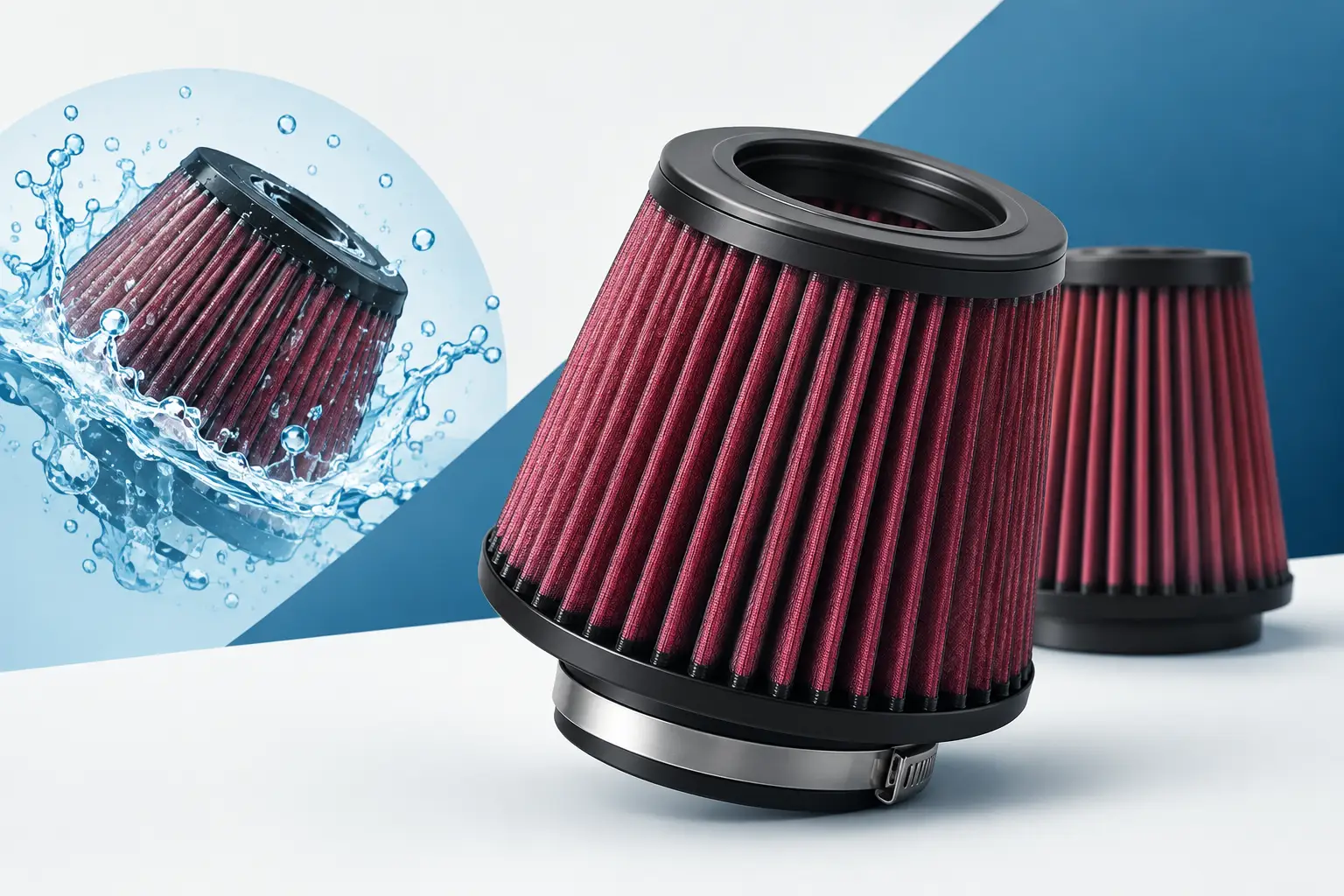
A clogged paper air filter is easy to overlook until the vehicle starts feeling less responsive. K&N washable reusable high flow air filters offer a different ownership approach: engineered airflow and effective contaminant capture in a filter designed to be cleaned, re-oiled, and used again rather than discarded at every service interval.
For a daily driver, that can mean fewer replacement filters and dependable protection over years of use. For an enthusiast, rider, or equipment operator, it means a high-flow filter platform built to support the way an engine breathes without turning routine maintenance into a recurring parts purchase.
Why Airflow and Filtration Must Work Together
An engine consumes a large volume of air, and that air is only useful when it reaches the combustion process cleanly. Dust, grit, sand, and other airborne contaminants can contribute to premature wear when they pass through the intake tract. At the same time, an air filter that becomes excessively restrictive can limit airflow as it loads with debris.
That is the balance an air filter must manage. It cannot be treated as an accessory that only matters at a scheduled service. The right filter is a protection component, but it also plays a role in throttle response, acceleration, and the character of the vehicle under load.
K&N High-Flow Air Filters use specially engineered, oiled cotton filter media. The multiple layers of cotton are designed to capture contaminants while allowing air to flow efficiently. The oil is part of the filtration system, helping the media retain fine dirt and dust. This is why correct cleaning and re-oiling matter: the filter should never be treated like a dry paper element.
The result is a durable replacement filter option for a broad range of cars, trucks, motorcycles, powersports machines, marine applications, and equipment engines. Fitment remains essential. A filter designed for one intake housing or engine family is not automatically suitable for another, even when dimensions appear close.
How K&N Washable Reusable High Flow Air Filters Save Over Time
Disposable filters have a straightforward advantage: replace the old part, fit the new one, and move on. That convenience has a cost over the life of the vehicle, especially for owners who drive high annual mileage, operate in dusty conditions, or maintain several vehicles.
A washable reusable filter changes that cycle. Instead of buying and disposing of a conventional replacement filter repeatedly, the owner cleans the existing K&N filter when service is needed, allows it to dry naturally, applies the correct filter oil, and reinstalls it. Over a vehicle’s service life, this can reduce replacement-filter spending and keep more used filters out of landfill.
The financial case depends on the vehicle, driving distance, service practices, and local replacement-filter pricing. A low-mileage vehicle operated mainly on clean paved roads may take longer to justify the initial investment than a frequently used truck, motorcycle, fleet vehicle, or off-road machine. But the long service life is a meaningful advantage for owners who intend to keep their vehicles.
There is also a practical benefit for enthusiasts who prefer to know what is fitted to their engine. A reusable filter gives you a serviceable component that can be inspected during routine maintenance rather than replaced by default.
What You May Feel Behind the Wheel
Air filters do not create magic power on their own, and reputable performance advice should say so clearly. Results vary by engine design, factory intake restriction, state of tune, driving conditions, and whether the original filter was already dirty or restricted.
Where an intake system benefits from improved airflow, drivers may notice more immediate throttle response and a stronger sense of acceleration. On certain applications, the gains can be more apparent when a high-flow replacement filter is combined with a correctly engineered intake system. Turbocharged, naturally aspirated, fuel-injected, and carbureted engines can all respond differently.
The strongest reason to choose a K&N filter is not a promise that every vehicle will feel dramatically faster. It is the combination of proven reusable oiled-cotton media, effective engine protection, long-term value, and a performance-focused airflow design. That is a better standard than chasing exaggerated claims.
For motorcycles and powersports vehicles, the experience can be especially relevant because intake sound, throttle response, and changing terrain are more noticeable to the rider. For commercial equipment and fleet applications, dependable filtration and serviceability may matter more than any perceived performance change. The correct product choice follows the job the engine needs to do.
Cleaning Is Maintenance, Not a Shortcut
Washable does not mean maintenance-free. A reusable filter should be serviced based on its condition and operating environment, not cleaned unnecessarily at every oil change. Over-cleaning can be just as unhelpful as ignoring a dirty filter.
Inspect the filter regularly, particularly after driving on unpaved roads, through construction zones, in agricultural environments, or in heavy dust. A visual check can reveal whether the filter is loaded with debris, damaged, incorrectly seated, or due for care.
Use a dedicated air filter cleaner and the proper filter oil. Household detergents, solvents, compressed-air blasting, and excessive heat can damage the filter media or affect its ability to filter correctly. Clean from the appropriate side according to product instructions, rinse gently, and allow the filter to dry fully. Do not reinstall it while wet.
When applying oil, use an even, light coating that covers the cotton media without soaking the filter. Too little oil can reduce filtration effectiveness; too much can create unnecessary mess and may affect nearby intake components. Let the oil wick through the media before installation, then wipe away any excess from the sealing surfaces.
A properly serviced filter should also be seated correctly in the factory airbox or intake assembly. Check the gasket, clamps, lid, and ducting. Air that bypasses the filter is unfiltered air, regardless of how capable the filter media may be.
Choosing the Right Filter for Your Application
The best replacement is always the one engineered for the exact vehicle or equipment application. Start with the year, make, model, engine, and where applicable, trim or submodel. Motorcycle, ATV, marine, and small-engine applications may require additional information such as engine displacement or model code.
Do not select only by appearance. Modern engine bays often have similar-looking airboxes with different filter dimensions, sealing designs, sensor locations, and airflow requirements. An exact-fit panel filter is intended to replace the factory filter in the original airbox. A universal filter is a different product category and may require measurements, adapters, fabrication, and a clear understanding of the intake layout.
If your goal is a straightforward service upgrade, an application-specific replacement air filter is usually the right starting point. If you are building for more substantial intake sound or performance potential, a complete cold air intake system may be the better route where available for your vehicle. The intake, filter, heat management, and fitment are then engineered to work together.
For buyers in Singapore and across Southeast Asia, K&N Singapore provides authorized access to application-specific filtration and intake products, helping owners avoid the uncertainty of generic or questionable-fit parts. Confirm compatibility before ordering, especially for imported, modified, or region-specific vehicles.
A Better Filter Choice Starts With How You Drive
A commuter covering city miles, a weekend track enthusiast, a touring rider, and a contractor operating equipment in dust do not have identical filtration needs. The common requirement is clean air delivered efficiently to the engine.
Choose a K&N washable reusable high-flow air filter when you want a serviceable, long-life component that supports both protection and airflow. Keep it clean with the correct products, oil it properly, and verify the fitment before installation. Then let the filter do what it was engineered to do: protect the engine every time you turn the key, press the starter, or put the equipment to work.