A boat that runs cleanly at the dock but loses RPM offshore often has a fuel problem, not an engine problem. A marine engine fuel filter is a small service item with a major job: it keeps water, sediment, tank debris, and microbial contamination from reaching precision fuel-system components. On the water, where a breakdown can mean more than an inconvenient ride home, that protection is worth treating seriously.
What a Marine Engine Fuel Filter Actually Does
Marine fuel systems operate in a harsher environment than most road vehicles. Fuel tanks breathe through vents, humidity changes rapidly, and water can enter through contaminated fuel, condensation, damaged fill caps, or poor storage practices. Diesel fuel can also support microbial growth where water meets fuel. The result may be rust, sludge, loose debris, and water droplets moving toward the engine.
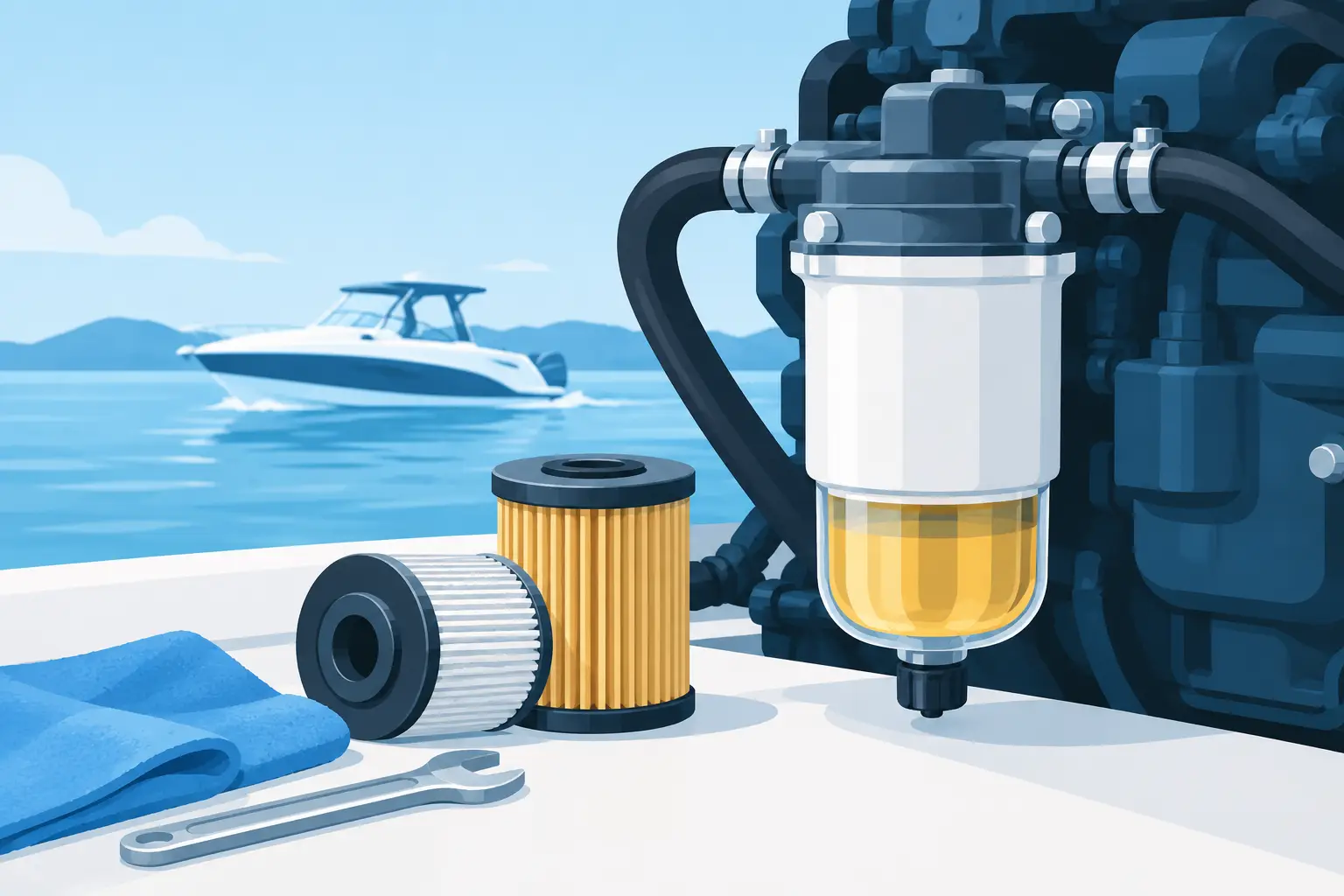
A filter captures solid contaminants before they reach the fuel pump, carburetor, injectors, or fuel rail. In many marine applications, a fuel-water separator adds another layer of defense by allowing water to collect in a clear bowl or drainable reservoir. The filter media then traps particles that could restrict fuel flow or damage close-tolerance components.
This is protection first, not a horsepower modification. But unrestricted, clean fuel delivery helps an engine produce the power it was designed to make. A clogged filter can cause hesitation, poor acceleration, surging, reduced top-end RPM, hard starting, and stalling under load. On a fishing boat, cruiser, or commercial vessel, those symptoms can quickly disrupt the day.
Filter Type and Micron Rating Must Match the System
Not every fuel filter belongs on every engine. The right choice depends on whether the engine is gasoline or diesel, its fuel-system design, manufacturer requirements, and whether a primary fuel-water separator is already installed.
The micron rating describes the approximate size of particles the filter is intended to capture. A lower micron number filters finer contamination, but it can also restrict flow sooner if the fuel supply is dirty. That trade-off matters. Fitting a very fine element where a higher-flow primary filter is required can create fuel starvation. Using a coarse filter where sensitive injectors need finer filtration can leave expensive parts exposed.
A common arrangement uses a larger-capacity primary separator between the tank and engine, followed by the engine manufacturer’s specified final filter. The primary unit catches water and larger debris before they reach the engine-mounted filter. This staged approach gives the system useful contaminant capacity without asking one small filter to do every job.
For modern gasoline EFI and diesel engines, follow the engine manufacturer’s filtration and micron specifications exactly. Fuel pressure, flow demand, and injector tolerances vary widely. A filter that physically fits may still be the wrong choice.
Gasoline and Diesel Have Different Risks
Gasoline systems are especially vulnerable to phase separation in ethanol-blended fuel. When excess water is absorbed, ethanol and water can separate from gasoline and form a corrosive layer that does not burn properly. A fuel-water separator can help detect water, but it cannot restore badly phase-separated fuel. If the fuel is compromised, the correct repair may involve draining the tank and cleaning the system.
Diesel engines face water contamination too, along with the risk of microbial growth during long storage periods. Water supports bacteria and fungi that create dark sludge, acids, and debris. Replacing filters without addressing contaminated fuel may only provide temporary relief. The tank, lines, and storage practices need attention as well.
Signs Your Fuel Filter Needs Attention
Do not wait for a complete no-start condition. Fuel restriction often becomes visible when the engine is asked to work harder, such as accelerating onto plane, running at high RPM, or pushing through current.
Watch for these symptoms, particularly if they appear after refueling or following a long layup:
- Loss of power or RPM at higher throttle settings
- Hesitation, stumbling, or surging under load
- Hard starting or repeated stalling
- A fuel-water separator bowl showing water, cloudiness, or debris
- A vacuum gauge, if fitted, indicating increasing restriction
These signs do not automatically prove the filter is at fault. A failing fuel pump, blocked tank vent, damaged fuel line, ignition issue, or contaminated fuel can create similar behavior. Still, the filter and separator are logical first inspection points because they are designed to reveal and contain contamination.
How Often Should You Replace It?
There is no single calendar interval that suits every boat. Manufacturer service schedules come first, but filter condition also depends on fuel turnover, tank cleanliness, local humidity, storage duration, and operating hours.
For recreational boats, inspecting the separator before each outing and servicing it at least annually is a sensible baseline when consistent with the engine manual. Boats that run frequently, use older fuel tanks, travel long distances, or operate in humid coastal conditions may need shorter intervals. Commercial operators should build filter checks into their planned maintenance program and keep service records.
A clear-bowl separator makes visual checks easier, but a clean-looking bowl does not prove that the filter media is unrestricted. Fine contamination may not be obvious. Conversely, replacing an element at the first sign of discoloration is not always necessary if the manufacturer’s guidance and restriction readings indicate it remains serviceable. The best approach combines scheduled replacement with evidence from inspections and engine behavior.
Carry at least one correct spare filter element and the tools needed to fit it. For vessels traveling offshore or operating far from a marina, a spare can turn a potentially stranded day into a manageable repair. Keep the spare sealed, dry, and protected from damage.
Replacing a Marine Fuel Filter Without Creating New Problems
Fuel-system service requires care. Work in a ventilated area, eliminate ignition sources, and follow the engine manufacturer’s shutdown and depressurization procedures. Gasoline vapors are highly flammable, while diesel spills create slip hazards and can contaminate the bilge and waterway.
Before removing the old element, inspect the housing, seals, hoses, clamps, and bowl for corrosion, cracks, staining, or loose connections. A new filter will not solve an air leak on the suction side of a diesel system or a deteriorated fuel hose. Confirm fuel lines are approved for marine use and properly secured.
Install the correct replacement element and lubricate seals only as directed by the filter or engine manufacturer. Over-tightening can distort seals or damage plastic bowls and threads. After service, prime the system according to the engine procedure, check carefully for leaks, and run the engine long enough to confirm stable fuel delivery at varying RPM.
Diesel systems may require bleeding or priming to remove air after a filter change. Modern engines differ significantly in their procedures, so guessing can lead to a no-start situation or unnecessary cranking. Follow the service manual for that engine.
Better Fuel Practices Extend Filter Life
A good filter is not a substitute for clean fuel handling. Buy fuel from high-turnover suppliers, keep deck fills and caps clean, and avoid letting a tank sit partially full for long periods in humid conditions. A fuller tank leaves less air space for condensation, although storage guidance can vary by boat and fuel type.
Use a clean, dedicated fuel container when portable fueling is necessary. Do not assume a container that looks clean is free of water or sediment. If a separator repeatedly collects water or debris, investigate the source instead of simply changing elements more often. The problem may be a leaking fill cap, vent issue, contaminated fuel supply, deteriorating tank, or aging hose material.
For owners who maintain their own boats, the same mindset applies across the engine: correct fitment, quality filtration, and scheduled inspection protect performance. K&N Filters Singapore supports enthusiasts and equipment owners who expect dependable filtration choices and clear application guidance, whether the job involves marine equipment or another hard-working engine.
A fresh marine engine fuel filter will not make contaminated fuel safe or fix every running issue. What it can do is give clean fuel a clear path to the engine, protect costly components, and help keep your boat ready when the water is calling.