
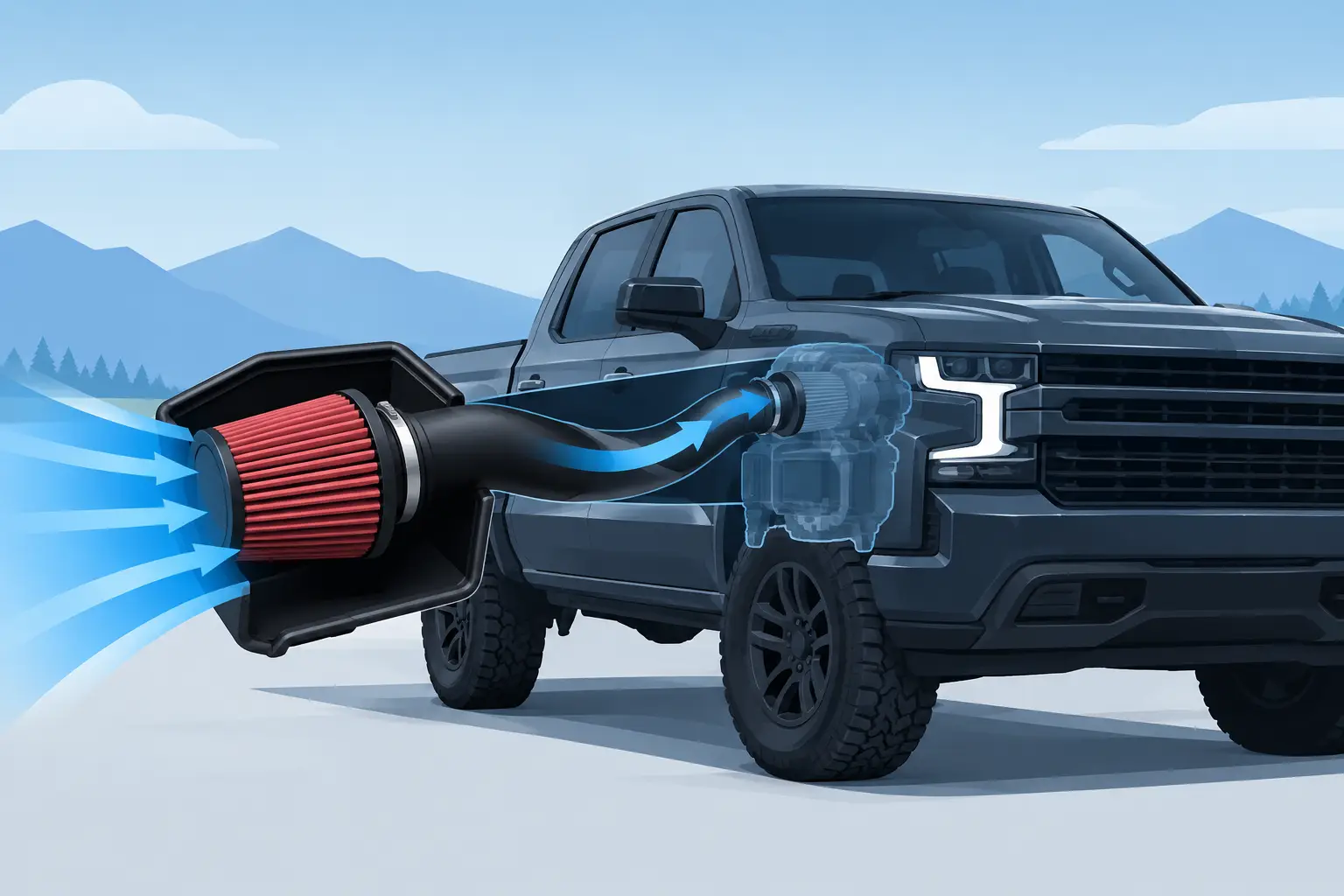
The factory air box on a truck is built to meet a long list of priorities: quiet operation, emissions compliance, packaging, cost, and dependable filtration over long service intervals. A truck cold air intake takes a different approach. By reducing airflow restriction and using a larger, high-flow filter, it can help the engine breathe more freely when demand rises.
That does not mean every intake delivers the same result on every truck. Engine design, factory calibration, towing load, intake routing, and the quality of the system all matter. The right intake is a vehicle-specific upgrade that can improve throttle response, add a stronger induction note, and support horsepower and torque gains where the engine can use the added airflow.
What a Truck Cold Air Intake Does
An internal-combustion engine needs a controlled mix of air and fuel. When you press the accelerator, the engine needs more air quickly. If the factory intake tract, filter, or air box creates a restriction, the engine must work harder to draw in that air.
A performance intake typically addresses that restriction with a larger filter surface area, smoother intake tubing, and a carefully designed path between the filter and throttle body. Many systems also use a heat shield or enclosed air box to help isolate the filter from hot underhood air. Cooler, denser air contains more oxygen, which gives the engine better conditions for efficient combustion.
The most noticeable change for many owners is throttle response. The truck may feel more eager when pulling away, merging, or accelerating in the midrange. You will also hear more of the engine under load. That deeper intake sound is not just decoration – it is often the audible result of greater airflow through the intake tract.
Actual horsepower and torque gains depend on the vehicle. Naturally aspirated trucks may see modest but useful improvements, while turbocharged applications can respond differently based on boost control and factory tuning. A properly engineered intake should be evaluated as a complete system, not by the largest advertised number alone.
When an Intake Upgrade Makes Sense
A truck cold air intake is a practical upgrade for owners who want a more responsive driving feel without making major engine modifications. It can be especially worthwhile if your factory filter is due for replacement, the original intake is restrictive, or you want reusable filtration rather than repeatedly throwing away disposable paper filters.
For daily-driven trucks, the benefit is often about sharper response and a more engaging sound. For work trucks, the priority may be dependable airflow and a durable filter that can be cleaned and reused. For performance builds, an intake can be a strong supporting modification alongside an exhaust upgrade, calibration, or other airflow improvements.
Towing is more nuanced. Added airflow can support the engine when it is working hard, but an intake is not a substitute for proper cooling, transmission maintenance, correct towing setup, or realistic load management. If your truck spends its life hauling in high heat or on dusty roads, filtration quality and heat management deserve as much attention as peak airflow.
Fuel economy is also not guaranteed. Some drivers see a small improvement when steady driving and lighter throttle use take advantage of reduced restriction. Others use the improved response and sound more aggressively, which can offset any efficiency benefit. Driving habits still have the final say at the fuel pump.
Cold Air Is Only Part of the Equation
The name can create an unrealistic expectation that every aftermarket intake always draws dramatically colder air. In practice, the best systems manage both airflow and temperature. An open filter placed in a hot engine bay may flow well, but it can ingest warmer air after the truck has been idling or crawling through traffic.
That is why intake design matters. A sealed or partially enclosed air box, a properly positioned heat shield, and a route that draws from outside the engine bay can help reduce exposure to radiant heat. On the other hand, a fully enclosed design that is too restrictive may limit the airflow benefit it was meant to provide.
Look for a system developed for your exact year, make, model, engine, and, where applicable, trim. The intake tube diameter, mass airflow sensor location, crankcase ventilation connections, and filter placement all need to work with the truck’s factory engine-management system. Universal parts may have a place on custom builds, but they require more fabrication and tuning knowledge than a vehicle-specific kit.
Choosing the Right Intake for Your Truck
Start with fitment, then consider how and where the truck is used. A daily-driven pickup operating mostly on pavement has different needs than an off-road truck that regularly sees mud, fine dust, water crossings, and rough terrain.
A quality intake should include secure mounting hardware, correctly shaped tubing, provisions for factory sensors and hoses, and clear installation instructions. It should not require you to force parts into position or leave wiring and vacuum lines under tension. Good fitment protects more than convenience – it helps prevent air leaks that can cause rough running, warning lights, or inaccurate sensor readings.
Filter media is another major decision. Reusable oiled-cotton filters are designed to capture contaminants while maintaining high airflow, and they can be washed and re-oiled instead of discarded. This can reduce replacement waste and provide long-term value for owners willing to follow the cleaning process. K&N has built its reputation around this high-flow, washable filter technology for more than five decades.
A dry synthetic filter can be a sensible choice for owners who prefer a no-oil service process. Neither style is automatically right for every use case. What matters is using a filter and intake system designed to provide the airflow, filtration performance, and service method appropriate for your truck.
If you drive in very dusty conditions, do not choose solely by filter size or sound. Ask whether the system supports an optional filter wrap, whether the filter is shielded from direct debris, and how accessible it is for inspection. A filter that is difficult to check is more likely to be neglected.
Installation Details That Protect Performance
Many vehicle-specific intake systems are designed for home installation with basic hand tools. Even so, take your time. Read the instructions before removing the factory air box, and keep the original components in case you need to return the truck to stock.
Inspect the intake tube and couplers after installation. Every clamp should be properly seated and tightened, with no pinched hoses or loose electrical connectors. Pay close attention to the mass airflow sensor if your truck uses one. It must be installed in the correct orientation, and its sensing element should never be touched or contaminated.
After the first drive, check that the intake has not shifted and that no clamps have loosened with heat cycling. If a check-engine light appears, do not ignore it. Reinspect the sensor connection, intake tube alignment, and all couplers before assuming the truck needs a tune.
Avoid placing a low-mounted filter where it can ingest standing water. Water entering an engine can cause serious damage, and no performance gain is worth that risk. Drivers who regularly encounter deep water, heavy mud, or severe off-road conditions should choose an intake layout with filter placement suited to that environment.
Cleaning and Re-Oiling a Reusable Filter
A reusable filter is not maintenance-free. It is serviceable, which is different. Check it at regular intervals and sooner when the truck operates in dust, construction zones, agricultural areas, or unpaved terrain.
Clean the filter only when dirt buildup calls for it, not simply because a calendar date has arrived. Over-cleaning adds unnecessary handling, while waiting too long can reduce airflow. Use the correct cleaner and oil for the filter media, follow the recommended drying time, and apply oil evenly without saturation.
Too much oil can migrate onto an airflow sensor, while too little oil can reduce the filter’s intended contaminant-capturing performance. The goal is a clean, evenly serviced filter – not a heavily soaked one. Inspect the heat shield, air box seals, and intake couplers at the same time.
Set the Right Expectations
A well-designed intake is one of the most satisfying bolt-on upgrades because it changes what you can feel and hear every time you drive. Still, it works best as part of a realistic plan. Do not expect it alone to transform a stock truck into a high-horsepower build, fix mechanical issues, or deliver identical gains in every temperature and driving condition.
Choose a truck cold air intake that fits correctly, protects the engine, and matches how you use the vehicle. When airflow, filtration, installation quality, and maintenance are handled properly, the result is a cleaner, more responsive path from the outside air to the power you call on every day.
Before ordering, confirm exact vehicle fitment and think beyond the first drive. The best intake is the one that continues to perform confidently through your truck’s actual miles, loads, weather, and maintenance routine.